Cleaning Trolley for Cleaners: A Commercial Buying Guide
What if the cleaning trolley your team pushes each day is adding extra stops to every route? Choosing a cleaning trolley for janitors is about more than carrying supplies. Its layout needs to suit the site’s movement patterns, task sequence and hygiene controls, while keeping replenishment practical.
It’s easy to focus on storage capacity alone. But if clean supplies, waste and used equipment aren’t managed in line with your cross-contamination protocols, the trolley may not support the way your facility operates. Procurement teams need clear requirements to compare configurations without assuming one setup suits every site.
This guide explains how to assess trolley layouts against routes and commercial cleaning tasks, plan for separation and safe chemical handling, and define capacity and replenishment needs before ordering. Cleaners Hub supplies janitor carts and a broad range of commercial cleaning products to businesses across Australia, including Melbourne and Sydney. Use the guide to set a practical specification for your facility, whether you manage a healthcare, hospitality, education or industrial environment.
Key Takeaways
- Assess a cleaning trolley for janitors against your facility’s routes, task sequence and replenishment needs, not an assumed standard layout.
- Use a clear selection sequence to define the supplies, separation and storage your team needs on site.
- Compare trolley configurations by workflow, then verify each option’s specifications and included components before ordering.
- Align trolley procedures with site-specific WHS, SDS and cross-contamination controls so staff can follow established routines.
- Plan procurement around ongoing janitorial replenishment, with Cleaners Hub supplying janitor carts and commercial cleaning products to businesses across Australia.
What a cleaner’s trolley needs to do on site
A janitor trolley is mobile equipment used to organise and transport supplies for commercial cleaning tasks. Its practical value depends on the areas staff cover, the order of work and how they move through the facility. A suitable cleaning trolley for janitors supports the site’s workflow and documented hygiene procedures. The trolley’s actual features still need to be checked against product information.
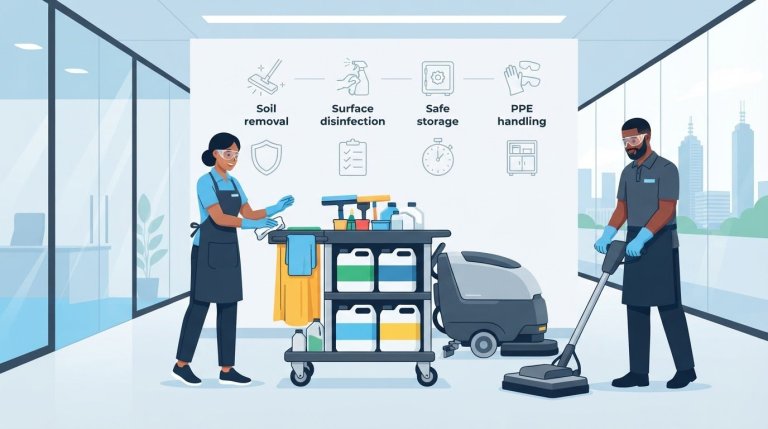
Think of the trolley as a mobile workstation, not a specification in isolation. A Mop bucket cart is a basic example of equipment used to move a mop and bucket during cleaning. The full load and layout still need to match the site’s tasks, route and procedures.
Map the cleaning route before selecting a trolley
Start by listing the facilities, floor areas and service points covered on each shift. A route through offices, shared amenities and meeting areas may follow a different sequence from washroom servicing or cleaning a warehouse. Record where staff begin, where supplies are replenished and where waste is taken.
Then check how the building affects movement. Lifts, narrow corridors, access controls, thresholds and storage locations can influence how equipment travels between tasks. Keep routine cleaning routes distinct from waste collection and restocking runs. If one trolley is expected to serve several activities, confirm that its proposed use fits each route and the site’s procedures.
Define the load by task, not by assumption
Build a task-based list of the items staff need, such as mop heads, buckets, microfibre cloths, brooms, dusters and approved cleaning products. Include only supplies required for the documented work, then check how staff will carry, access and replenish them during the shift.
Identify which items must remain separate under the facility’s hygiene and cross-contamination protocols. For example, if the site uses colour-coded cloths or mop heads, define how staff will keep each group organised and prevent mixing during the route. Don’t assume a trolley has a particular capacity, compartment, holder or fitting. Confirm those details against the relevant product information before specifying a configuration.
Procurement teams reviewing commercial cleaning supplies in Melbourne can use the same task-led approach: define the work first, then check that the selected equipment and replenishment items fit the documented routine.
How to choose a cleaning trolley for janitors by site requirements
Select a cleaning trolley for janitors by matching the facility’s schedule, routes and hygiene procedures to verified product details. A written specification gives procurement teams a consistent basis for supplier enquiries and approval, without relying on assumed trolley size or features.
- Map the tasks. List the cleaning activities assigned to each operating area and shift. Separate routine cleaning from waste collection, restocking and other tasks that may follow a different schedule.
- Trace the routes. Record the service points and travel sequence. During a site review, note constraints such as lift access, corridor width, access controls, thresholds and the distance between work areas and storage.
- List required supplies. Identify the tools and cleaning products needed for the documented tasks. Include replenishment items so the proposed trolley arrangement reflects the work performed across the shift.
- Define segregation. Record which supplies, used items and waste must be kept separate under site procedures. If colour-coded equipment is in use, document how staff identify and manage each group.
- Confirm storage and specifications. Note where the trolley will be stored and any access or movement limits. Ask the supplier to confirm relevant dimensions, components, capacity and other specifications against the product information before procurement approval.
Build a site-specific trolley specification
Put the findings into a short procurement brief: operating area, tasks, service points, route constraints, required tools, replenishment needs, separation requirements and storage location. This makes supplier responses easier to compare against the actual workflow. If product details do not answer a requirement, request confirmation rather than treating an unverified feature as included.
Use professional cleaning guidance as a reference point, not a substitute for site requirements. Resources from ISSA, the worldwide cleaning industry association can inform broader industry practice, while the final selection should reflect your facility’s procedures and operating conditions.
Check hygiene and chemical-handling requirements
Confirm how colour-coded supplies fit the site’s documented cross-contamination protocols. Plan how staff will access current Safety Data Sheets (SDS) and handle cleaning chemicals in line with workplace procedures. The trolley supports the work, but it does not by itself ensure WHS compliance or chemical safety. Verify site-specific controls with the responsible team.
Once requirements are documented, review the commercial cleaning products range alongside the tools and consumables your team needs to replenish.
Compare janitor trolley configurations against daily cleaning workflows
Compare trolley arrangements against the work staff perform, then verify every relevant detail against product information and site requirements. A configuration worth investigating for routine office rounds may not suit washroom servicing or a route spanning a larger facility.
Assess three workflow needs separately: how staff organise tools, how they carry and replenish consumables, and how they manage waste or used equipment. If the schedule includes frequent returns to a supply room, check whether the proposed arrangement supports that replenishment pattern. If staff prepare supplies before a longer route, confirm the trolley can accommodate the required items without assuming a particular capacity or fitting.
Compare by task
| Site task and workflow need | Configuration to investigate | Supplier confirmation needed |
|---|---|---|
| Routine office rounds, with general cleaning tools and consumables used across scheduled service points. | An arrangement that keeps the required tools and supplies organised and accessible along the planned route. | Confirm dimensions, included components and whether the proposed layout suits access through the site’s corridors, lifts and storage areas. |
| Washroom servicing, where supplies and used items may need to remain separate under site procedures. | An arrangement that can support the facility’s separation and handling processes for clean supplies, used equipment and waste. | Verify which separation features or fittings are included, and whether they support the documented cross-contamination protocols. |
| Larger facility routes, where staff may carry prepared supplies across multiple areas before replenishing. | An arrangement to assess against the full task list, route conditions and planned replenishment points. | Confirm dimensions, load limits and fitted components from current product details. Check movement suitability against the site layout. |
Treat each row as a set of questions, not a claim that a particular trolley type or feature is available. Dimensions, load limits and fitted components are procurement checks. If a detail is absent from the product information, request confirmation before comparing options or seeking approval.
Review the proposed setup against the facility’s documented WHS controls and operating procedures. For sites in New South Wales or Victoria, confirm applicable requirements with the responsible workplace team, and assess the trolley’s verified specifications against local routes and tasks. The same principle applies to facilities in Melbourne and Sydney: check the actual building layout and procedures rather than assuming requirements are identical across sites.
The right cleaning trolley for janitors is the configuration that aligns with actual tasks, movement patterns and hygiene procedures. Confirm the full specification before ordering, and assess the proposed arrangement against the facility’s requirements rather than relying on generic trolley categories or unverified product comparisons.

Set up janitor trolley procedures for WHS, SDS and hygiene controls
Janitor trolley procedures must follow each site’s documented workplace controls, chemical-handling processes and hygiene protocols. The trolley can help staff organise equipment for the work, but its presence or layout does not establish SDS compliance, chemical safety or WHS compliance.
Make SDS compliance part of the operating routine
Staff need to identify the current Safety Data Sheet (SDS) for each cleaning chemical in use and know how to access it under workplace procedures. Keep SDS information available through the site’s approved system, whether staff access it digitally or in another documented format. Don’t assume that placing a document on the trolley is sufficient: access arrangements should match the facility’s procedures and remain practical during the shift.
Use the current SDS to inform site procedures for handling, segregation and storage. If the chemical range or task changes, confirm that the relevant SDS information and instructions remain current. Keep the trolley arrangement consistent with those controls, but don’t treat trolley placement as a substitute for staff training, approved handling processes or a site risk assessment.
Facilities in New South Wales and Victoria should have their procedures reviewed against applicable state WHS requirements and relevant Safe Work Australia guidance. Confirm site-specific obligations and controls with the responsible workplace team rather than assuming the same process suits every facility.
Protect separation between cleaning tasks
A documented colour-coding system can help staff distinguish cleaning tools by area or task. It only supports cross-contamination protocols when the site defines the colour assignments, trains staff in their use and checks that equipment stays within its assigned area. Colour alone is not a complete hygiene control.
Cleaners Hub supplies mop heads, buckets and microfibre cloths in colours used in hygiene colour-coding systems. If these items form part of your routine, specify the required colours and how staff should manage them on the trolley. Include checks in the work procedure: confirm equipment is correctly assigned before the route, keep used items separate as required, and replenish supplies without mixing colour groups.
During routine checks, supervisors can look for misplaced or damaged items and confirm that the trolley setup still supports the current cleaning schedule. Record any changes to colour assignments or handling processes in the site’s documentation, then communicate them to the team before the revised procedure takes effect.
Review commercial cleaning products for site replenishment alongside your documented chemical and hygiene procedures, so the selected supplies support the system staff are expected to follow.
Source a cleaning trolley for janitors through a reliable supply workflow
A reliable procurement process turns site requirements into clear questions for the supplier. Before approving a cleaning trolley for janitors, confirm the product specifications, included components, suitability for the facility and ongoing supply needs. That gives operations and procurement teams a basis for assessing fit without relying on assumed features or availability.
Prepare a clear supplier enquiry
Provide the facility type, cleaning tasks, route conditions and relevant operating procedures. Note access constraints, storage arrangements, hygiene separation requirements and the supplies staff need during each shift. The clearer the brief, the easier it is to check a proposed trolley against actual work rather than a generic description.
Ask for confirmation of the details that affect approval, including dimensions, load limits, fitted components and what is included. If product information does not cover a requirement, request clarification before placing an order. Also identify recurring needs such as mop heads, buckets, cloths and cleaning products, so trolley assessment sits within the broader janitorial replenishment plan.
Plan for ongoing supply
Cleaners Hub supplies janitor carts and commercial janitorial products to businesses across Australia, including businesses in Melbourne and Sydney. For Melbourne-based procurement, review the Melbourne-based information alongside the facility’s requirements and the Melbourne cleaning supplies page.
The janitorial category can also help teams review relevant supplies for their established routines. Check product details and suitability directly, and don’t assume that a category listing confirms a particular trolley configuration or its availability. If several operating areas share a procurement plan, record each area’s requirements separately so replenishment decisions remain aligned with site procedures.
Before approval, compare the supplier’s confirmed details with the written specification and check that the proposed equipment supports the intended workflow. Then browse commercial cleaning products for your facility to review relevant supplies for ongoing operations.
Set your next trolley procurement up for success
A cleaning trolley for janitors should support the facility’s routes, task sequence and documented hygiene controls. Start with the work staff perform, define the supplies and separation procedures they need, then verify trolley specifications and included components before approval. This gives procurement teams a clear basis for comparing options and planning replenishment.
Cleaners Hub supplies janitor carts and commercial janitorial products to businesses across Australia, including Melbourne and Sydney. These products can form part of a broader purchasing plan for your site’s cleaning operations.
With a practical specification in place, you can assess equipment against the way your team works and keep hygiene procedures central to the decision. Browse commercial cleaning products to review relevant supplies for your facility. A considered selection can help your team establish a more organised, consistent cleaning workflow.
Frequently Asked Questions
What should facility managers look for in a cleaning trolley for janitors?
Choose a cleaning trolley for janitors by matching its verified specifications to the site’s tasks, routes, access constraints and hygiene procedures. Confirm dimensions, load limits and included components before approval, rather than assuming a particular capacity or layout. Check that the proposed arrangement supports the tools and supplies staff need, keeps items organised under site procedures, and fits the facility’s storage and replenishment routine.
How do I choose a janitor trolley for a large commercial site?
Start with the cleaning schedule and map the route across operating areas, service points and storage locations. List the tools and supplies needed for each task, then identify where staff will replenish or manage waste during the shift. Compare the written requirements with confirmed trolley specifications, including dimensions and load limits. If the route includes lifts, access controls or narrow corridors, check those constraints before procurement approval.
How can a janitor trolley support cross-contamination protocols?
A trolley can support cross-contamination protocols by helping staff keep cleaning supplies organised according to the facility’s documented system. Colour-coded cloths, buckets and mop heads are available in blue, green, red and yellow, but each site must define what those colours mean. Staff should follow the assigned areas or tasks, check equipment during use and replenishment, and keep used items separate as required by workplace procedures.
What should be considered when carrying cleaning chemicals on a janitor trolley?
Follow the site’s chemical-handling and storage procedures, using current Safety Data Sheet (SDS) information for each product in use. Confirm how staff can access relevant SDS documents and how chemicals must be handled, segregated and stored. Check whether the trolley arrangement suits those procedures, but don’t assume trolley placement alone ensures chemical safety or SDS compliance. Confirm site-specific controls with the responsible workplace team.